



投稿日:2023年07月07日
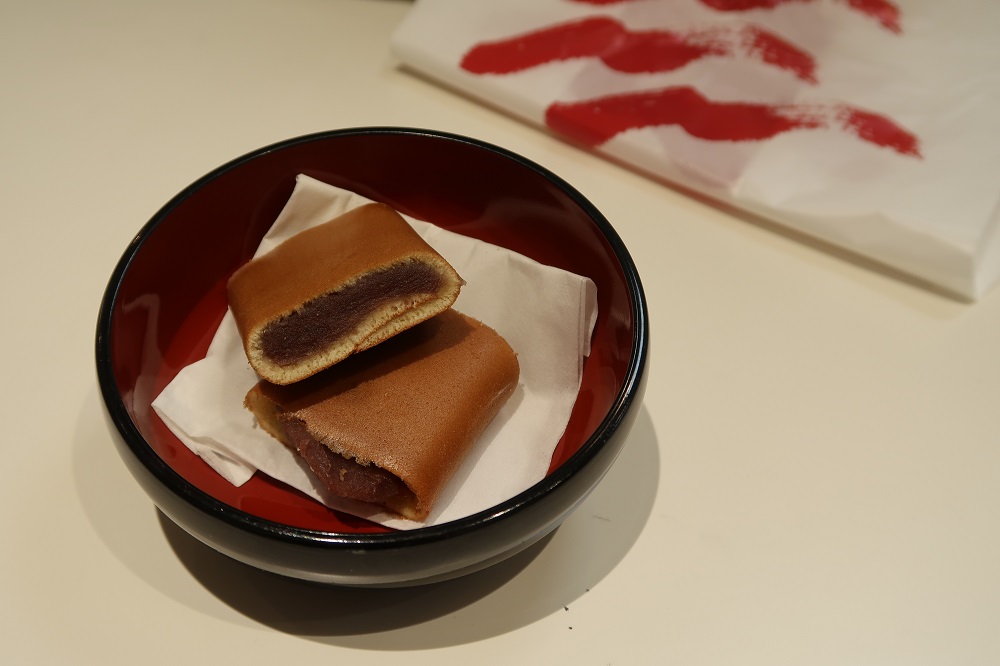
Genji-maki is a rolled cake made by baking sponge cake (castella) together with a filling of sweet red bean paste.
More than 10 confectioneries in Tsuwano make this traditional sweet, and while the basic concept is the same, each shop adds its own special touch, resulting in many different varieties of Genji-maki.
This time, we visited Chikufuken, which is located on Honmachi, the main street. The shop’s make-your-own Genji-maki experience is available on days when the SL Yamaguchi steam locomotive (running between Shin-Yamaguchi and Tsuwano) is in operation. It is open from 13:00 to 15:00, which coincides with the time when the SL train is in Tsuwano.
The steam locomotive usually operates on weekends from March to November, with the exception of a two- to three-week period from late June to early July.


The finished Genji-maki, cut into bite-sized pieces.
Please forgive the less-than-perfect photos, but with my hands covered in sweet bean paste and everything happening so quickly, I had little chance to take artistic pictures. It was a fun experience, did not take too much time out of a short visit to Tsuwano, and I walked away with a delicious sponge cake, a photo, and a wonderful memory.

Genji-maki is a local speciality with a history said to go back several hundred years. A local legend tells the story of how the wife of Tsuwano’s last domain lord gave this sweet bean-filled cake its name.
During the Edo period (1603–1868), the wives and children of Japan’s domain lords (otonosama or daimyō) were required to spend part of their lives in the capital city of Edo as part of the sankin-kōtai (“alternate attendance”) system. Introduced by the Tokugawa shogunate, this system required the lordts to maintain two residences: one in their own domains and another in Edo. They were also required to spend alternating periods of time in each location, often travelling with large entourages between their domains and the capital.
The presence of their families in Edo served as a political safeguard (kept as “hostages”), ensuring the loyalty of the lords and reducing the possibility of rebellion against the shogunate. As a result, many wives and children spent long periods living away from their home domains.
At the end of the Edo period, with the fall of the Tokugawa shogunate and the abolition of the sankin-kōtai system, these families were finally able to return to their home domains. Some wives had never visited their domain before, as they had married at a young age and spent their entire lives in Edo. This was also the case for the wife of Tsuwano Domain’s last domain lord.
After the lively streets of Edo, moving to a small rural castle town like Tsuwano was a difficult adjustment for the lady, and she was often seen feeling melancholy.
When a wealthy merchant heard about this, he brought many gifts to the first lady of the domain. Among the many sweets and cakes he offered, the one she liked most was a simple rolled sponge cake filled with sweet bean paste.
When the merchant asked her to name the cake, she replied that the purple filling reminded her of a scene from The Tale of Genji (Genji Monogatari), one of Japan’s most famous classical works of literature. The merchant was impressed by the young lady’s knowledge and appreciation of ancient tales, and decided that the cake should be called Genji-maki (maki meaning “roll” or “scroll”).
Today, there are several places where visitors can try making their own Genji-maki.
Back to the MAIN MENU of Diving Deeper